
Protecting underground pipelines against third-party damage remains one of the most critical challenges for pipeline operators worldwide. Excavator strikes, illegal tapping and stray currents pose a threat to the safety, environmental protection, and service continuity. Traditional monitoring solutions often rely on heavy infrastructure, delayed detection, or post-incident inspections.
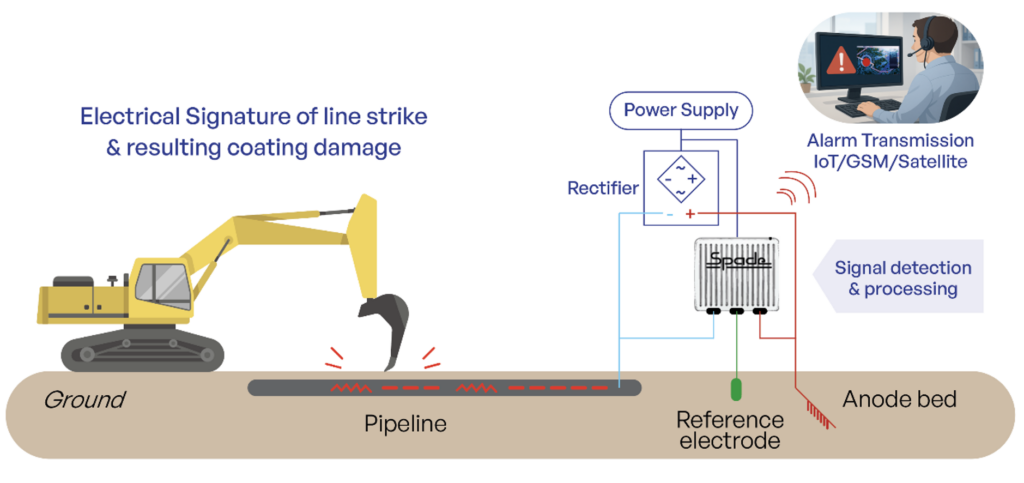
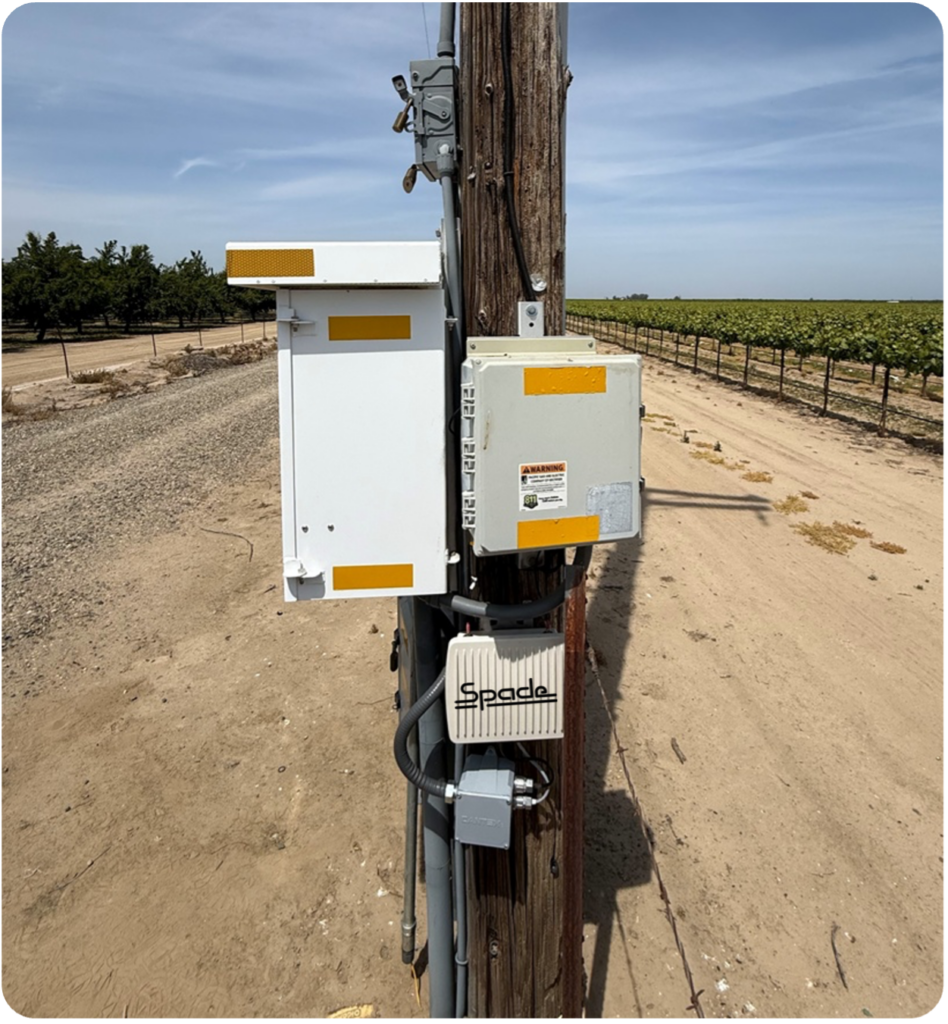
SPADE offers an innovative solution: real-time detection of external threats by continuously analyzing cathodic protection (CP) signals on operating pipelines. SPADE integrates seamlessly into existing installations without modification and can acquire up to 10,000 measurements per second.
From Concept to Field-Proven Technology
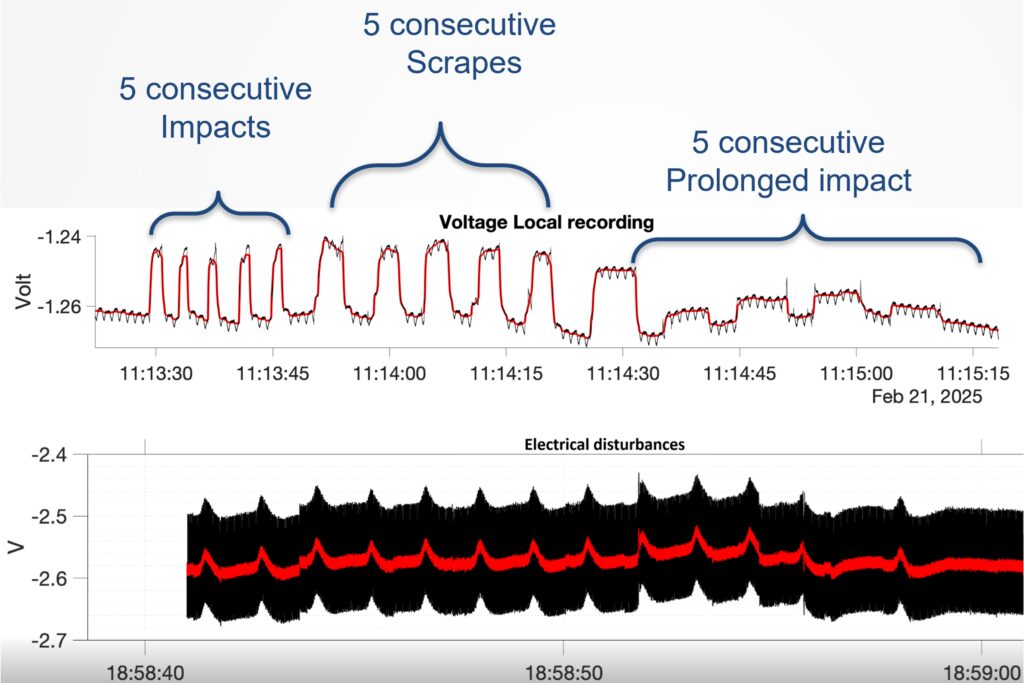
Over the past several years, the SPADE technology has been validated through extensive field campaigns on operational transmission networks in Europe and North America. Initial trials demonstrated that mechanical impacts on buried steel pipelines generate distinctive electrical signatures that can be detected by monitoring cathodic protection parameters.
Additional field work conducted in France and the United States confirmed both the feasibility of detection and the robustness of the solution under real operating conditions.
Smarter Detection Through Improved Algorithms
Pipelines are exposed to a wide range of electrical disturbances. Some represent genuine threats—such as an excavator strike—while others originate from natural or operational sources, including AC/DC interference or lightning.
SPADE integrates advanced signal-processing algorithms capable of filtering noise and identifying relevant events.
Improved Event Location Along the Pipeline
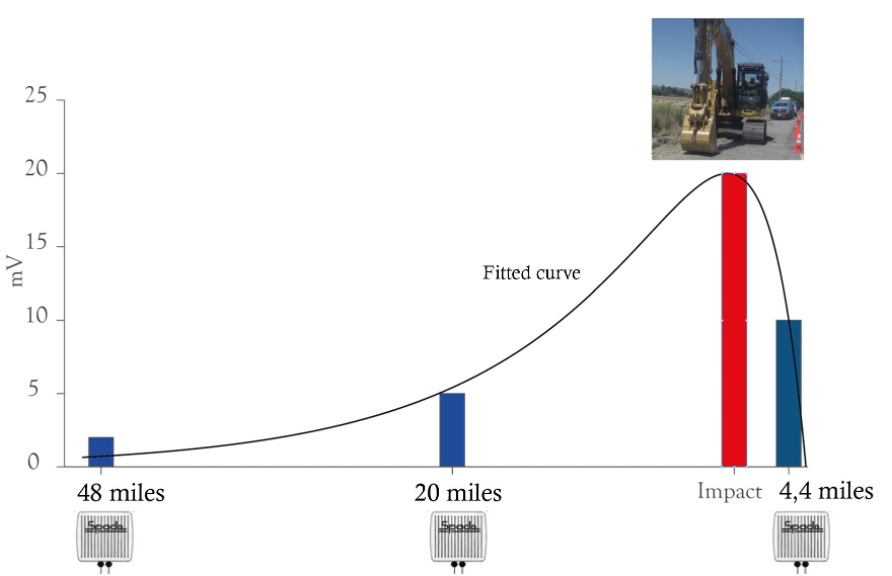
By synchronizing multiple SPADE detectors installed along a pipeline, the system compares signal amplitude and attenuation across several locations. This improves event location accuracy and enables operators to respond promptly.
The “Topper”: A Practical Tool for Testing and Training
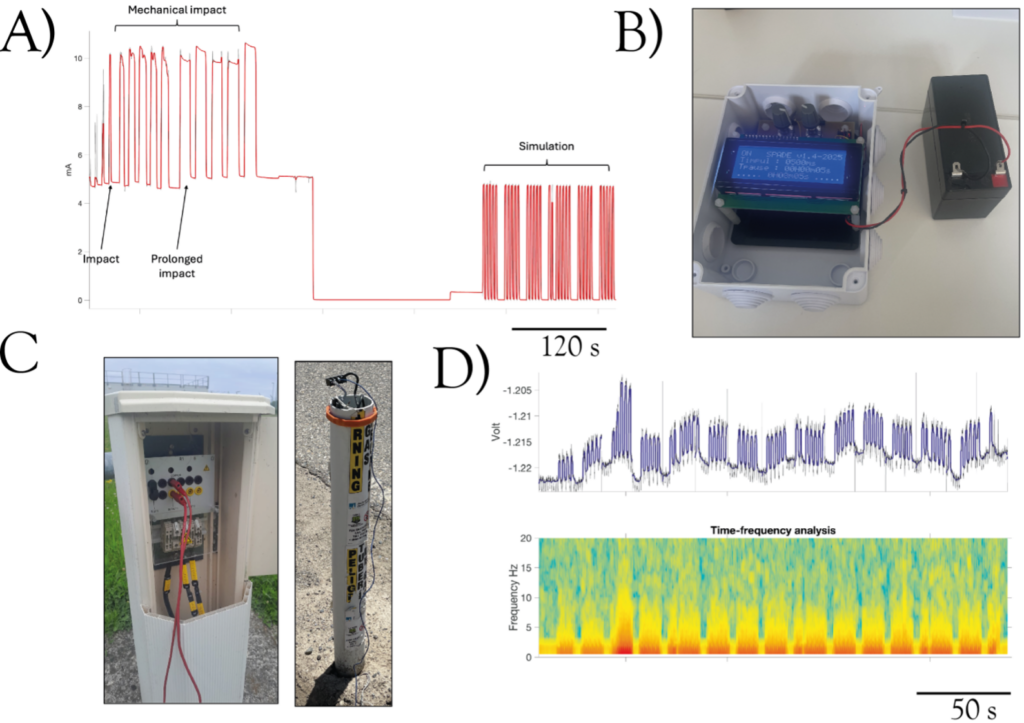
Validating detection systems traditionally requires heavy logistics or waiting for real incidents. To address this, SPADE developed the ‘Topper’, a dedicated electrical signal generator reproducing the cathodic protection signature of a mechanical impact.
The ‘Topper’ enables repeatable testing scenarios, operator training, and periodic system calibration—without excavation.
Integrated Monitoring in a Single Device
SPADE detectors also integrate Remote Monitoring Unit (RMU) functions, enabling continuous cathodic protection monitoring and third-party damage detection within a single device. This consolidation reduces hardware requirements, simplifies maintenance, and lowers operational costs.
Real-time Monitoring Intelligence
Recent field results confirm the maturity of the SPADE system for industrial deployment. It enhances pipeline and environmental safety while generating significant cost savings.
By transforming cathodic protection signals into real-time integrity data, SPADE is redefining how pipeline operators manage external threats.